If you own or are buying a condo in Sherman Oaks, there is a document that matters more to your escrow timeline this year than your HOA's reserve balance. It is a structural inspection report on your building's balconies, decks, and stairways, and as of January 1, 2026, California law requires it to sit inside the standard disclosure packet every buyer receives before closing. A large share of Sherman Oaks' condo stock happens to be exactly the kind of building this law was written for, which means a requirement that sounds like HOA paperwork is quietly becoming a gating item in real transactions.
Here is the part most owners have not caught up to: this is not a new rule that phases in gently. The inspection itself was already due. The disclosure requirement just made the absence of that inspection visible to every buyer, every lender, and every buyer's agent doing basic due diligence.
What the Law Actually Requires
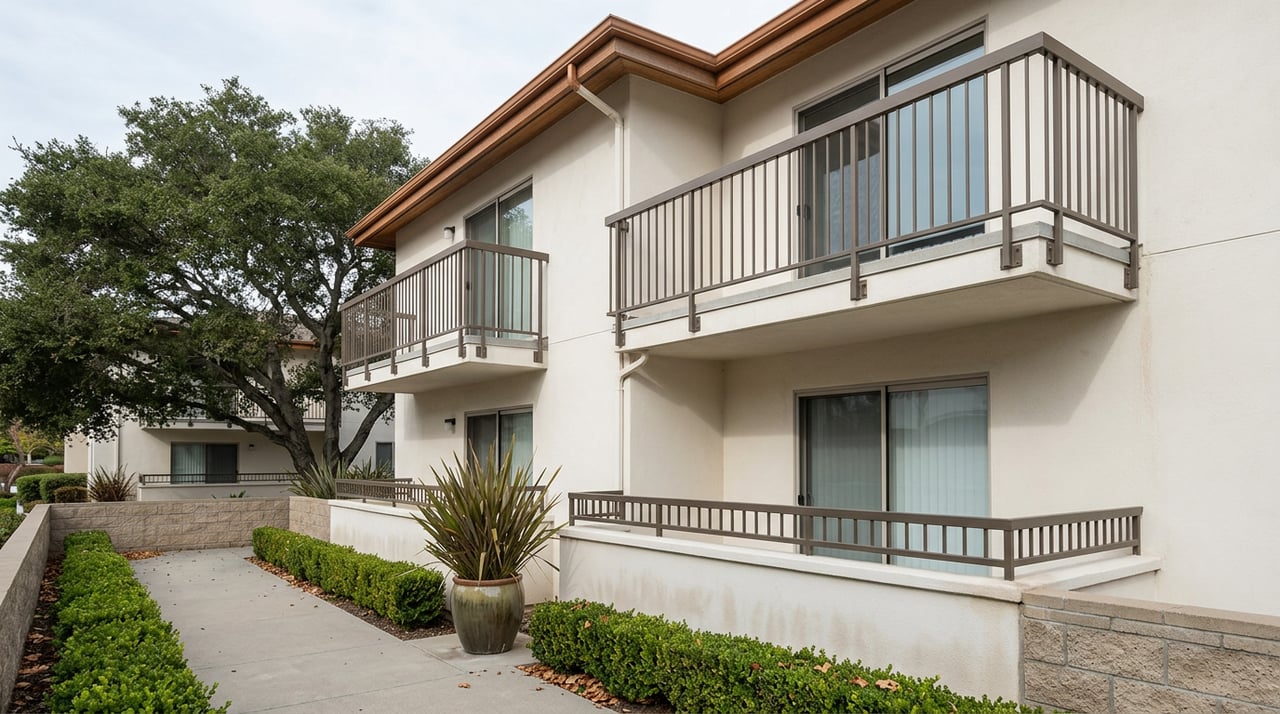
Senate Bill 326, signed in 2019 and codified as Civil Code section 5551, requires condominium associations of three or more units to inspect their exterior elevated elements when those elements are wood-supported and more than six feet above ground. That covers balconies, decks, stairways, and walkways, the load-bearing parts that hold people up, not just the railings. The inspection has to be performed by a licensed architect or structural engineer, and as of 2024's AB 2114, licensed civil engineers can now do it too, which widened a pool that had been a real bottleneck.
The first deadline for that inspection was January 1, 2025. It has not moved. This matters because a companion law, SB 721, covers rental apartment buildings under a similar structure, and that deadline did get pushed to January 1, 2026 through AB 2579. Condo owners who heard about one extension and assumed it covered both laws are wrong, and that confusion is common enough that compliance guides are still correcting it in 2026. If your Sherman Oaks HOA is a true condominium association, the SB 326 deadline passed over eighteen months ago, not next year.
Why This Lands Harder in Sherman Oaks Than in Most of the Valley
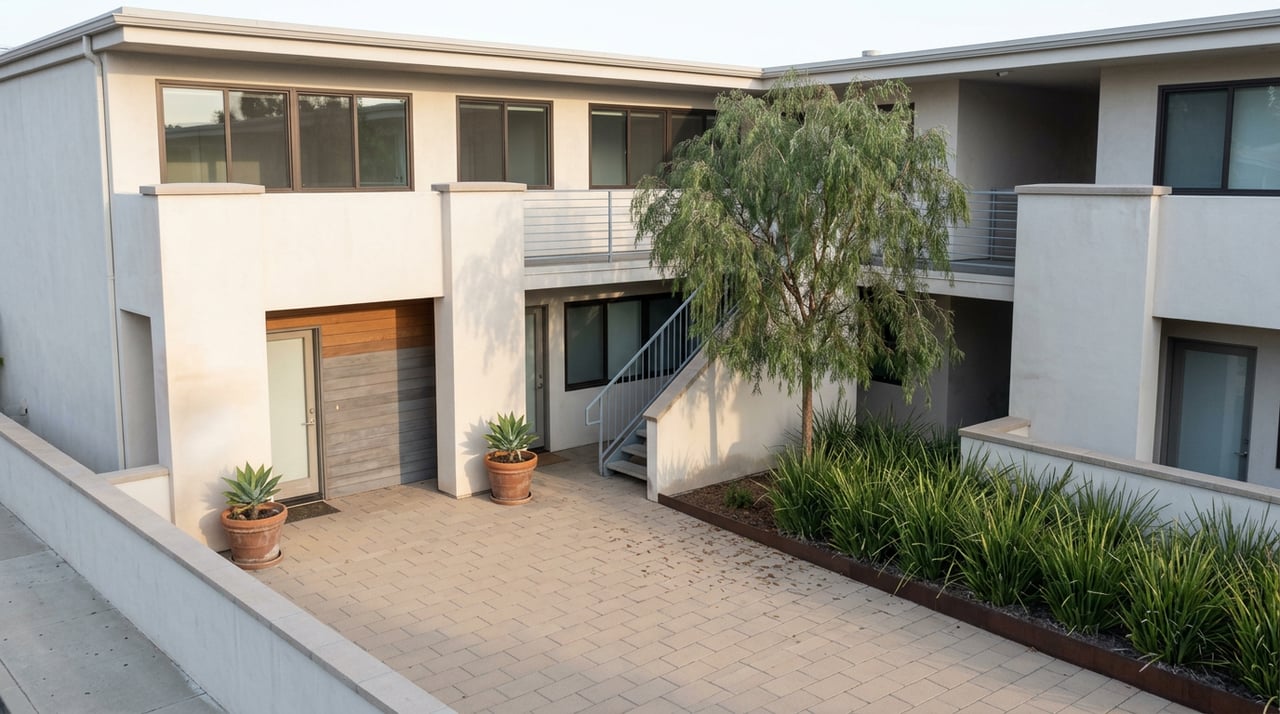
Sherman Oaks' flat terrain made it one of the San Fernando Valley's natural condo and townhome corridors, clustered close to Ventura Boulevard rather than up in the hills where single-family lots dominate. That building boom happened almost entirely inside the exact era SB 326 targets: three-to-five-story wood-frame buildings from the 1970s through the early 1990s, most of them built with private balconies as a standard unit feature.
| Building | Year Built | Units | Stories |
|---|---|---|---|
| Sherman Villas | 1971 | 72 | 4 |
| Country Club Condominiums | 1971 | 122 | 3 |
| The Oaksher | 1979 | 24 | 3 |
| Sherman Village | 1982 | 118 | 5 |
| 5420 Sylmar Ave | 1989 | 68 | 3 |
| Woodman Villas | 1991 | 42 | 3 |
That is more than 440 units across six buildings alone, none of them built more recently than 1991, all of them the kind of wood-framed low-rise construction with balconies that SB 326 was written to catch. If you are shopping condos in Sherman Oaks, you are very likely shopping inside this law's jurisdiction whether you know it or not.
The Report Is No Longer a Board Matter
SB 326 created the inspection duty. A separate law, SB 410, effective January 1, 2026, is what changed the stakes for anyone buying or selling. It amended Civil Code section 4525, the statute that governs what an HOA has to hand over in a resale, and now requires the association's most recent SB 326 inspection report to be included in that disclosure package. The change moves balcony safety findings out of board meeting minutes and into standard buyer review during every escrow.
That is a meaningful shift from how this used to work. Before SB 410, a buyer's agent had to know to ask an HOA for inspection records and hope the association produced them. Now the report is supposed to arrive automatically, the same way CC&Rs and reserve study summaries already do. If it does not arrive because it does not exist, that absence is itself information a buyer is entitled to see and react to.
What a Missing Report Actually Costs You in Escrow
The uncomfortable reality is that a lot of associations still do not have this report. By October 2025, industry estimates put noncompliance with the original SB 326 deadline at more than 20 percent of California condo associations statewide. Compliance guides tracking the issue into 2026 describe the same pattern locally, noting that as of April 2026 any HOA that had not completed its inspection was already over a year past the statutory deadline, with structural engineer backlogs stretching the wait even further for boards trying to catch up now.
For a Sherman Oaks seller, a missing or overdue report does three things at once. It becomes a disclosure item that a buyer's agent is trained to flag rather than a formality. It raises the question of what an HOA has been ignoring on the maintenance side more broadly, since boards that skip a mandatory structural inspection often have deferred other things too. It also introduces financing friction. Lenders underwriting condo purchases have started treating buildings without current inspection documentation as a bigger risk, which shows up as delayed approvals or requests for additional condo questionnaires mid-escrow.
If the report does exist, the cost question does not disappear. A mid-size condominium complex can expect to pay somewhere between $15,000 and $50,000 for the initial inspection depending on the number of elevated elements and whether destructive testing is required to check for wood rot behind waterproofing. That figure typically flows into the reserve study, which means a report showing deferred repairs can translate directly into a special assessment conversation, the kind of number a buyer wants to know before writing an offer, not after.
The upside for buildings that did comply on time is real. SB 326 sets a nine-year cycle between inspections, so a Sherman Oaks building that completed its initial inspection by the January 2025 deadline is not due again until January 1, 2034. A clean, current report is not just a box checked. It is nearly a decade of certainty on one specific risk.
What To Actually Do Before You List or Write an Offer
- If you are selling a condo in a building three or more units with wood-supported balconies, request the SB 326 inspection report and its date directly from your HOA management company before you list, not after you are in escrow.
- If no report exists, treat that as a pre-listing task to manage on your timeline rather than a surprise a buyer's agent surfaces during their contingency period.
- If a report exists but flagged deferred repairs, ask whether those repairs have been completed and whether the reserve study has been updated to reflect the cost, since an unresolved finding invites renegotiation later.
- If you are buying, request the current SB 326 report as a standard part of your HOA document review, the same way you would request CC&Rs, meeting minutes, and the reserve study.
- Confirm the building's construction date and unit count with your agent early, since three-unit-and-up wood-frame buildings from the 1970s through early 1990s are the profile most likely to be affected.
Where This Law Does Not Apply
SB 326 is specific about scope, and it is worth being precise here rather than treating every Sherman Oaks property the same way. The law applies only to condominium associations as defined under the Davis-Stirling Act, meaning buildings where the HOA maintains the structure as common area. It does not apply to planned developments where an owner holds title to their own structure, and it does not apply to single-family homes or duplexes. If you are buying a detached house or a home in a planned unit development where you own the exterior walls and balcony outright, this particular disclosure requirement does not touch your transaction.
Where This Leaves You
The building profile that made Sherman Oaks a popular, walkable, flatland alternative to the surrounding hills is the same profile now generating real disclosure friction in condo sales. Knowing which buildings carry that friction, and having the right questions ready before an offer is written or a listing goes live, is the difference between managing this as a known variable and getting caught by it mid-escrow.
If you are weighing a condo sale or purchase in Sherman Oaks and want a straight read on what a specific building's compliance status means for your timeline and your price, Mario Acosta can walk through it with you. Get a free home valuation and a clear picture of what your building's paperwork actually says before you make your next move.