Radford Studio Center sold for $1.85 billion in 2021. Five years later, the same 55-acre lot is under contract to Netflix for somewhere between $330 million and $400 million, a decline of roughly 78 percent on a price-per-square-foot basis, according to The Real Deal's analysis of the deal terms. The studio that gave Studio City its name just went through the kind of value collapse that would normally send a shockwave through the neighborhood around it.
It didn't. Not the way you'd expect. And the gap between what happened on Radford Avenue and what's happening on the residential streets around it is the more useful story if you're actually comparing Studio City against other Valley neighborhoods right now.
What Actually Happened at the Radford Lot
The studio at 4024 Radford Avenue has operated under several names since Mack Sennett opened it in 1928. It became Republic Pictures, then leased space to CBS starting in 1963, and shows like Gunsmoke, Gilligan's Island, and Seinfeld were filmed there. In 2021, ViacomCBS sold the property to Hackman Capital Partners and Square Mile Capital Management for $1.85 billion, and the new owners announced a $1 billion plan to modernize the lot with up to 25 new soundstages.
That renovation never got the runway it needed. Production volume in Los Angeles kept sliding after the 2023 strikes, financing costs rose, and Hackman defaulted on roughly $1.1 billion in bondholder debt. In January 2026, Hackman handed control of the property to its lenders, led by Goldman Sachs. By April, reports surfaced that Netflix was negotiating to buy the lot at a steep discount, and Bloomberg reported on June 18 that Netflix had signed a contract, with the price landing close to $400 million and a close expected sometime in the third quarter of 2026. As of this writing, the deal hasn't been publicly confirmed as closed, so treat the final number as directional rather than final.
Here's what that markdown looks like side by side:
| 2021 Sale | 2026 Deal (under contract) | |
|---|---|---|
| Buyer | Hackman Capital Partners / Square Mile Capital | Netflix |
| Price | $1.85 billion | ~$330M–$400M |
| Price per acre | ~$33.6 million | ~$7.3 million |
| Price per square foot | ~$1,542 | ~$333 |
| Seller | ViacomCBS | Goldman Sachs (as lender) |
That's not a soft correction. That's a studio changing hands for about a fifth of what it traded for five years ago.
The Assumption Everyone Reaches For Next
If you've spent any time reading about Los Angeles real estate, you already know the connective tissue people reach for here: Hollywood production is down, so the neighborhoods built around Hollywood production must be down too. It's not a bad instinct. Major soundstages across the region recorded a 62 percent occupancy rate in the first half of 2025, according to FilmLA data reported by The Hollywood Reporter, itself barely better than the depressed numbers from the year before. Studio City has spent three years watching production activity thin out. A studio losing 78 percent of its value in that environment reads like confirmation of a broader neighborhood story.
That's the assumption. It's reasonable. It's also not what the residential comps show.
What the Comps Actually Show
Public MLS-aggregated data put Studio City's three-month median sale price at $1.81 million through the period ending in July 2026, down 5.6 percent from the same window a year earlier. That's the number that would seem to confirm the Hollywood-slowdown story. But the same data set showed price per square foot at $802, down only half a percent year over year. When the median moves five times faster than the per-square-foot figure, the median is telling you about which specific homes happened to close that quarter, not about what buyers think the neighborhood is worth. Zillow's home value index for Studio City showed a similar pattern: a typical home value of roughly $1.5 million as of July 2026, down 2.0 percent year over year. Soft, but nowhere close to the kind of drop the studio down the street just absorbed.
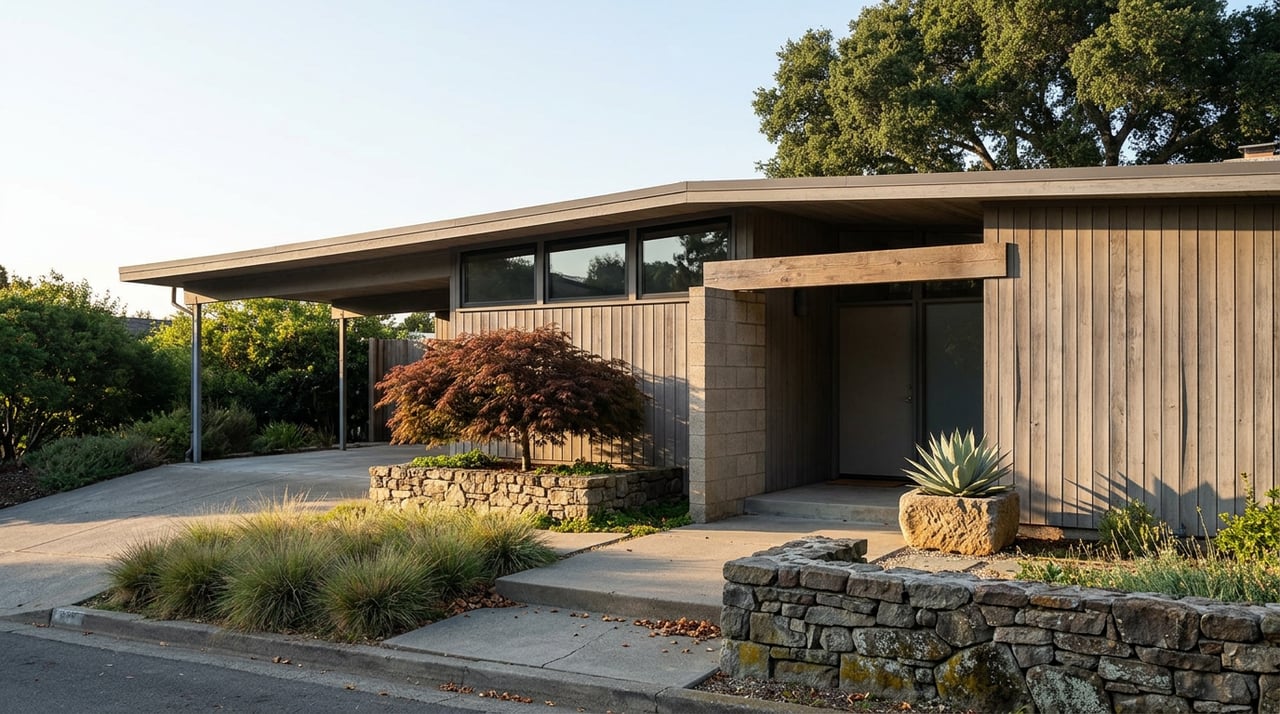
Zoom into the specific pockets and the divergence gets sharper. Wrightwood Estates, the hillside enclave with mid-century homes attributed to architects like Schindler, Neutra, Lautner, and Soriano, has kept moving well-priced listings in around 31 days when the presentation and provenance are right, with prices spanning roughly $1.9 million to $4.5 million. Colfax Meadows, on the flatter, tree-lined streets inside the Carpenter Community Charter School boundary, has continued to draw multiple offers on desirable listings, some closing within about 27 days and a couple percent over asking. Fryman Canyon Estates has held a similar pattern for hillside product with real architectural credibility.
None of that reads like a neighborhood taking a cue from its namesake studio's balance sheet.
Studio City's home prices are not a referendum on the entertainment industry. They are a referendum on how many houses with real architectural pedigree hit the market that month.
Why the Correlation Breaks Down
The instinct to link the two stories comes from treating Studio City's housing market as an extension of the studio's fortunes, the way a factory town's home values might track a plant's payroll. That's not actually how this market works, and the Radford deal itself explains why.
Netflix isn't buying the lot to shut it down. It's buying a working production campus, one that mortgage filings showed was still substantially leased even during the run-up to foreclosure. The people who make this a residential market, buyers with a $2 million to $4 million budget who want walkability to Ventura Boulevard, proximity to Fryman Canyon, and a shot at a home with real design integrity, aren't a workforce tied to one studio's lease terms. The Radford story is a capital markets story: an overleveraged 2021 purchase, higher financing costs, a production downturn that hit occupancy but didn't empty the lot, and a lender that needed to sell. It's a story about debt structure, not about whether people want to live in Studio City.
What actually moves price on these streets is the same thing that's always moved it here: how many homes with genuine architectural credibility or a defensible lot come up in a given month, measured against how many buyers are chasing that specific inventory. That's why price per square foot barely moved while the headline median swung. That's why the hillside pedigree pockets kept pending fast while the wider market cooled. The mechanism setting your comp isn't the health of the entertainment industry. It's whether the three or four other houses on your exact type of street sold for what you're about to ask.
What This Means If You're Comparing Neighborhoods Right Now
If you're weighing Studio City against Sherman Oaks, Encino, or somewhere else in the Valley, the Radford headline is worth knowing but not worth pricing off of. A few things to actually act on:
- Pull comps by pocket, not by neighborhood. A Wrightwood Estates architectural home and a flats-adjacent traditional on a busier street are not the same market, even though a portal will average them into one median.
- Don't assume a production slowdown discount exists on your offer. The data doesn't show buyers pulling back on well-presented, well-priced homes in the pedigree pockets. If anything, that inventory is still going fast.
- If you're selling, price to your closed comparables in your specific micro-area, not to last year's peak and not to headlines about the entertainment industry. A property's architectural story and condition are doing more work in this market than any macro narrative.
- Watch the close, not just the contract. The Netflix deal isn't finalized. If it closes as reported, it will be a fair signal that Los Angeles studio real estate has found a bottom, which matters for the broader local economy, but it still won't be the number that sets your comp.
FAQ
Does the Netflix purchase of Radford Studio Center change home values in Studio City? Not directly. The deal reflects a capital markets story about studio debt and financing costs, not a shift in residential demand. Home values in the neighborhood have moved on a different track, with price per square foot holding far steadier than the studio's price collapse.
Is entertainment production leaving Los Angeles for good? The data shows a real slowdown, with soundstage occupancy in the low 60s percent range through mid-2025. Netflix's willingness to buy rather than continue leasing suggests at least one major player is betting on Los Angeles production capacity for the long term, but that's a separate question from what a specific house on a specific street is worth today.
Should I wait to buy in Studio City until the Radford sale closes? There's no evidence the residential market is waiting on that transaction. The comps that matter to your offer are the recent closings on your target street, not the timeline of a commercial real estate deal a few blocks away.
If you're trying to figure out what your specific comp set actually supports, whether you're buying into one of Studio City's pedigree pockets or comparing it against Sherman Oaks and Encino, that's the kind of pricing conversation worth having before you write an offer or set a list price. Mario Acosta works this exact stretch of the Valley and can walk you through what your budget actually buys, street by street, and get you a free home valuation grounded in real closed comparables rather than a headline.