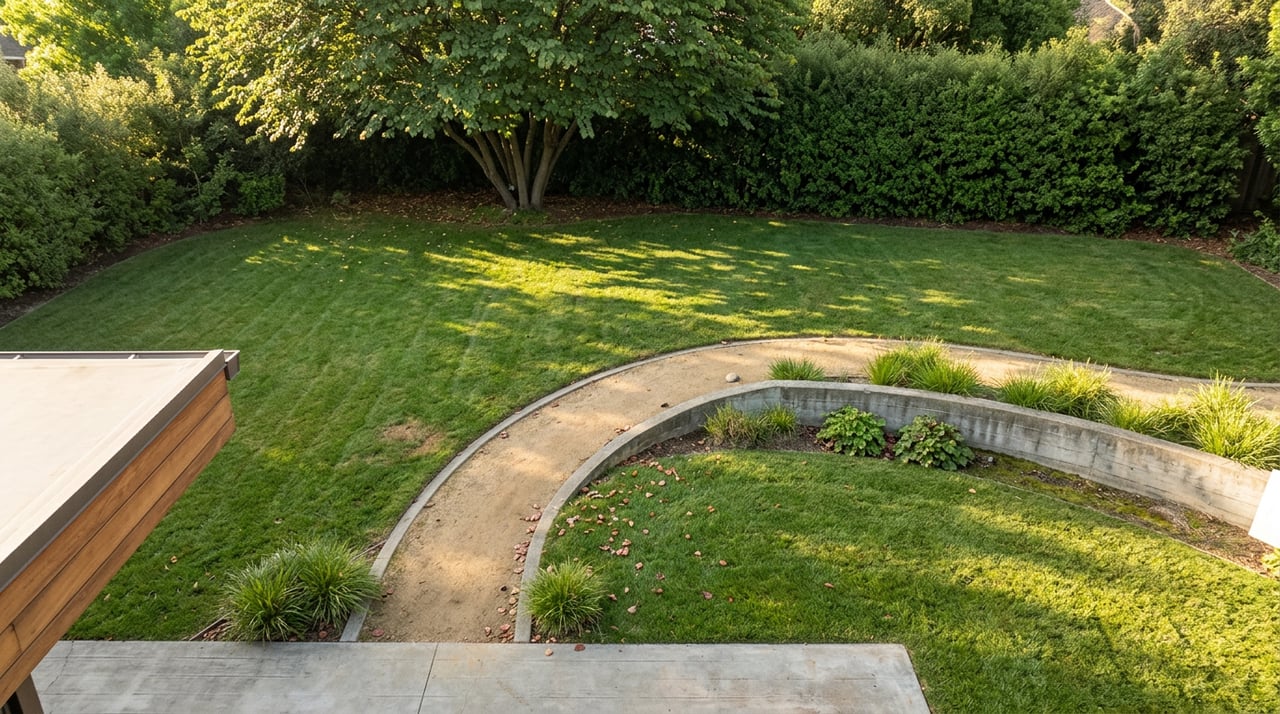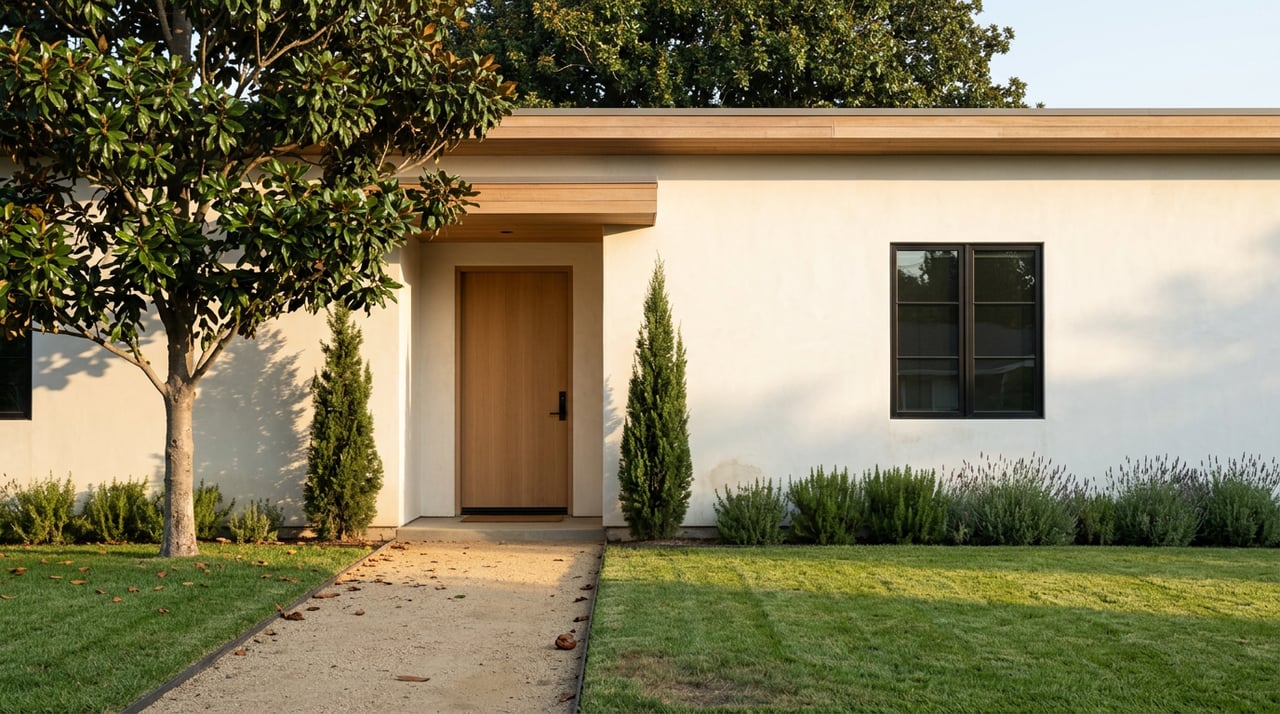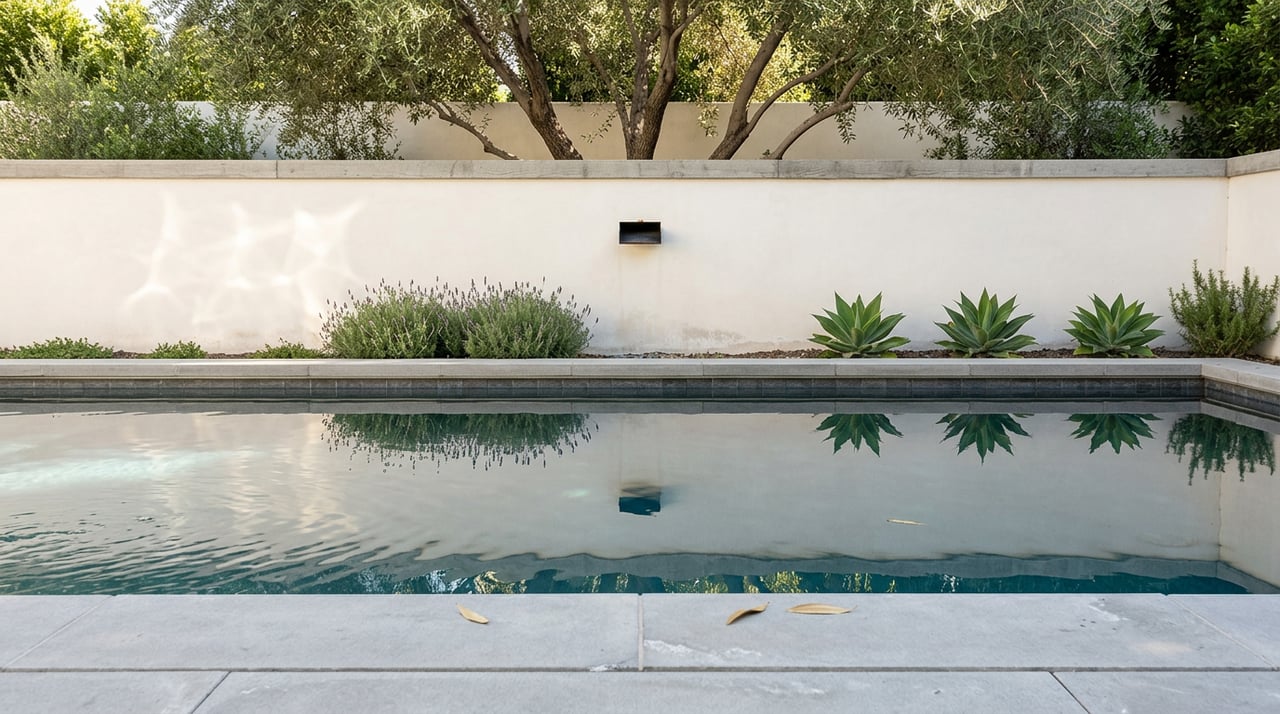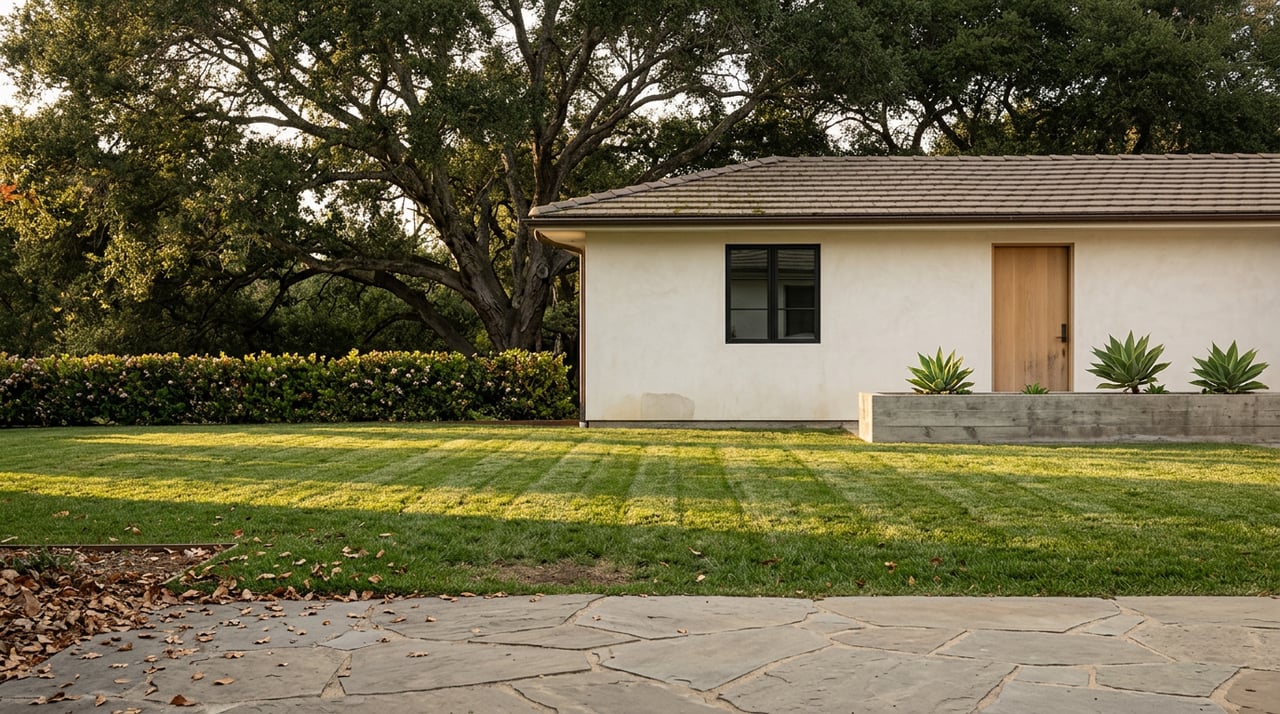
Walk the streets south of Ventura Boulevard in Amestoy or Royal Oaks and you'll see it again and again: a ranch home built sometime between the 1950s and the 1980s, set behind a circular drive, and somewhere past the pool or along the back property line, a second structure. A converted garage. A guest house with its own kitchen that's been there since a previous owner's in-laws needed somewhere to stay. North of the boulevard, toward the Sepulveda Basin, the pattern repeats in a flatter, more uniform version: postwar tract homes with long driveways and a detached garage that quietly became a rental unit sometime in the last three decades.
None of this is unusual for Encino. It's structural to the neighborhood's housing stock. What's changed is what it means for a seller.
The deal doesn't die at the showing. It dies at the appraisal.
Most sellers with an unpermitted guest house assume the risk is obvious: a buyer walks through, spots the second kitchen, and either loves it or gets nervous. That's not where these deals actually fall apart. They fall apart three weeks later, when a lender's appraiser pulls the permit history and finds a structure that doesn't match the county record.
FHA and VA appraisers routinely exclude unpermitted square footage from their valuation entirely, and conventional lenders frequently follow the same logic. That means the guest house a seller has been counting as bonus value, sometimes as rental income supporting the listing price, contributes nothing to the number the buyer's loan is actually based on. The buyer's loan-to-value breaks, the financing has to be restructured, and the seller is renegotiating a price they thought was already agreed.
The practical result is a buyer pool that narrows fast. Cash buyers and investors, who evaluate a property on its own terms without an appraisal contingency, become the most realistic audience for an as-is sale. Financed buyers, particularly FHA and VA borrowers, are often screened out before they ever see the disclosure package. Sellers who go this route typically absorb a real discount too: converted garages tend to see appraisal-driven price reductions in the 8 to 15 percent range, and even unpermitted ADUs, despite growing buyer awareness of amnesty options, still see something in the 5 to 12 percent range.
That's the cost of doing nothing. It's rarely the cost most sellers picture when they first hear "unpermitted."
What actually changed on January 1, 2025
For years, the calculation for an Encino seller with one of these structures was simple and mostly discouraging. Legalizing meant bringing a decades-old converted garage up to full current code, which for a lot of older construction was either prohibitively expensive or structurally impossible without a teardown. So the unit stayed hidden, disclosed reluctantly if at all, and priced around at the negotiating table.
Assembly Bill 2533, signed by Governor Newsom on September 28, 2024 and effective January 1, 2025, was sponsored by the Casita Coalition and rewrote that calculation. The law created a statewide amnesty pathway for accessory dwelling units and junior ADUs built before January 1, 2020, which is a meaningful expansion from the prior cutoff of January 1, 2018 that applied under earlier legalization rules. Under AB 2533, a city cannot deny a legalization permit solely because the unit doesn't meet current building code. The standard shifted to health and safety, evaluated under Health and Safety Code Section 17920.3, rather than a full modern-code retrofit.
In Los Angeles specifically, the Department of Building and Safety published its implementation bulletin confirming that a qualifying unit can be brought to compliance under the codes in effect at the time it was built, not the codes in effect today. LADBS also waives impact and connection fees when no new utility infrastructure is required, which is common for older conversions that were built sharing water, gas, or electrical service with the main house rather than running new lines.
One detail sellers consistently miss: Los Angeles has run a separate legalization pathway since 2017 called the Unpermitted Dwelling Unit Ordinance, which requires the owner to commit at least one legalized unit to low or moderate income affordable housing. AB 2533 doesn't carry that requirement. LADBS accepts AB 2533 applications without the UDU affordability covenant, which makes it the more straightforward option for most homeowners who simply want the structure recognized, not converted into a covenanted rental.
| Before AB 2533 | Under AB 2533 (since Jan. 1, 2025) | |
|---|---|---|
| Eligible construction date | Built before January 1, 2018 | Built before January 1, 2020 |
| Compliance standard | Full current building code | Health and safety standard, or code in effect when built |
| City's discretion to deny | Could deny based on code violations | Cannot deny solely for code noncompliance |
| Impact and connection fees | Standard fees applied | Waived if no new utility infrastructure needed |
| Affordability requirement | Required under LA's 2017 UDU Ordinance | Not required under AB 2533 |
Why this shows up more in Encino than in most Valley neighborhoods
Researchers estimate Los Angeles County has somewhere between 50,000 and 60,000 unpermitted ADUs, and the Los Angeles Department of Building and Safety launched a dedicated legalization unit within three months of AB 2533 taking effect, processing more than 2,000 applications in its first quarter alone. That volume isn't evenly distributed across the city. It concentrates in neighborhoods with older, larger-lot housing stock, and Encino fits that description closely.
Most Encino homes were built between the 1950s and the 1980s, an era when adding a guest house or converting a garage was a private decision between a homeowner and a contractor, not a permitted process most people thought twice about. On the estate-scale lots south of Ventura Boulevard, the deep setbacks and circular drives that define blocks like Amestoy and Royal Oaks made a detached guest structure a natural addition. North of the boulevard, toward the Sepulveda Basin, the flatter postwar tract lots came standard with long driveways and detached rear garages, exactly the kind of structure that gets converted into livable space over a few decades of ownership changes.
That history means an Encino listing is statistically more likely than a newer-construction neighborhood to carry one of these structures. It also means the seller who assumes their situation is unusual is usually wrong. It's common enough that an experienced Encino buyer's agent will ask about it before the first showing.
The three paths, and what each one actually costs
Once a seller knows they have an unpermitted structure, and California Civil Code Section 1102 requires disclosing it once you know, there are three realistic paths forward.
- Legalize before listing. Under AB 2533, this typically runs two to six months depending on the scope of corrections the inspection identifies, and it can include a confidential third-party pre-inspection using the city's own Substandard Checklist, which lets an owner see likely findings before committing to the formal application. The upside is real: a legalized structure counts as appraisable square footage, reopens the FHA and VA buyer pool, and removes the disclosure liability tied to an unresolved unpermitted condition.
- Disclose and sell as-is. This is faster and avoids upfront construction cost, but it narrows the buyer pool toward cash and investor buyers and typically means absorbing the discount ranges described above.
- Revert the structure to its original use. Rarely the right call financially, since it means losing usable square footage and spending money to remove something a buyer might otherwise value, but it remains an option for owners who don't want any ongoing complexity tied to the structure.
The math almost never favors path three for an Encino seller. The real decision is between one and two, and it comes down to how much runway exists before the seller needs to close.
Disclosure doesn't change no matter which path you choose
Whichever direction a seller takes, California Civil Code Section 1102 requires disclosing known unpermitted work on the Transfer Disclosure Statement, and concealing it can create liability under Civil Code Section 1710 for misrepresentation after the sale closes. This isn't a negotiable step, and it isn't something a buyer's agent or inspector will miss. Permit history in Los Angeles is a matter of public record, and any buyer's agent working a competitive Encino listing will pull it as a matter of course.
The sellers who come out ahead aren't the ones who hope the structure goes unnoticed. They're the ones who know their permit history before they set a list price, and who decide deliberately whether legalizing under AB 2533 fits their timeline.
FAQ
Does every guest house or converted garage in Encino qualify for AB 2533 amnesty? The structure has to function as an ADU or JADU, meaning a separate living space with basic habitability features, and it has to have been built before January 1, 2020. A structure built more recently without permits doesn't get the same protection and faces standard code enforcement.
Will legalizing guarantee my appraisal comes in at full value? No. Legalization removes the exclusion that keeps unpermitted square footage out of an appraiser's calculation, but the appraiser still values the space using comparable sales. It puts the structure on equal footing with the rest of the home instead of automatically discounting it.
Can I still sell if I don't want to deal with the legalization process at all? Yes. Selling as-is with full disclosure is legal and common, particularly for sellers on a tighter timeline. It narrows the buyer pool and typically comes with a negotiated discount, so it's worth understanding that tradeoff before setting expectations on price.
If you're sitting on an Encino property with a guest house or converted garage and you're not sure which path makes financial sense before you list, that's exactly the kind of pre-listing decision that benefits from a second set of eyes on your specific permit history and timeline. Mario Acosta offers a free home valuation that accounts for situations like this, not just the comps, so you know what you're actually working with before you set a price.